

Paying by card, scanning a QR code and sending money from a banking app can all take seconds. They do not offer the same protection when a payment goes wrong. An instant confirmation is not always an instant payout, and a transfer sent to the wrong account can be far harder to recover than a disputed card purchase.
For South Africans choosing how to pay, the useful questions are straightforward: Does the recipient accept the method- Does it work with your bank or device- What will the transaction actually cost- When will the money be available- What happens if the goods never arrive, a debit is unauthorised or the payment fails-
Cash remains part of that decision. The South African Reserve Bank's 2026 Cost of Cash study estimates that cash accounts for about 56% of consumer transactions by volume. Digital choices are expanding, but a method that works at an online retailer may be impractical at a township spaza shop, a market stall or for someone without a bank card.
Payment methods compared
Compare the main South African payment routes by acceptance, typical processing and the protection available if something goes wrong. Fees, limits and settlement times vary by bank, merchant and provider.
| Method | Examples | Typical processing | Cost and protection to check |
|---|---|---|---|
| Debit and credit cards |    |
Authorisation is usually immediate; refunds can take several business days. | Check issuer interest and merchant fees. Eligible disputes may go through the card issuer; a chargeback is not an automatic refund. |
| Bank transfer and PayShap |   |
Standard EFT may take longer between banks; supported PayShap transfers are near real time. | Bank tariffs and limits differ. Confirm the recipient carefully; mistaken or authorised transfers can be difficult to recover. |
| Instant EFT and pay by bank |    |
Merchant confirmation can be prompt; merchant settlement follows the provider's schedule. | Check checkout fees and the exact authorisation flow. A payment confirmation is not proof that a payout has settled. |
| Digital wallet and QR |     |
Usually authorised in seconds when the device, card and merchant are supported. | Fees and refund routes depend on the linked card, app and merchant. Verify the recipient and amount before approving a QR payment. |
| Cash and prepaid vouchers |   |
Cash is immediate in person; voucher redemption depends on the retailer and participating merchant. | Check voucher validity, redemption limits and refund terms. Cash and redeemed vouchers offer less scope for reversing a payment. |
| Buy now, pay later |  |
Approval is made at checkout; instalments are collected on the provider's schedule. | Review instalment dates, late-payment rules and the total price. Missed payments can have consequences under the provider's terms. |
Which payment method fits the situation-
- Buying from an unfamiliar online store: a card with appropriate issuer dispute procedures can offer an additional route to challenge an eligible transaction. Check the merchant and its refund terms first; chargebacks are not automatic refunds.
- Sending urgent money to a known recipient: PayShap or the bank's immediate-payment service is more suitable than a standard interbank EFT when the destination bank and limits are supported. Confirm the beneficiary before authorising.
- Shopping without a card: pay-by-bank checkout, a participating QR service, SCode or a cash voucher may work. A bank account is still needed for most bank-based options.
- Paying a regular service provider: a documented debit order, preferably with an authenticated DebiCheck mandate when offered, avoids repeated manual transfers. Keep a record of the cancellation procedure.
- Spreading a retail purchase: compare BNPL instalment dates and missed-payment rules with the actual cost of credit. A smaller payment today does not make the purchase cheaper.
- Accepting customer payments: combine at least a familiar card option with a locally relevant alternative. Verify the provider's settlement schedule, refund tools and reconciliation reports before focusing on checkout speed.
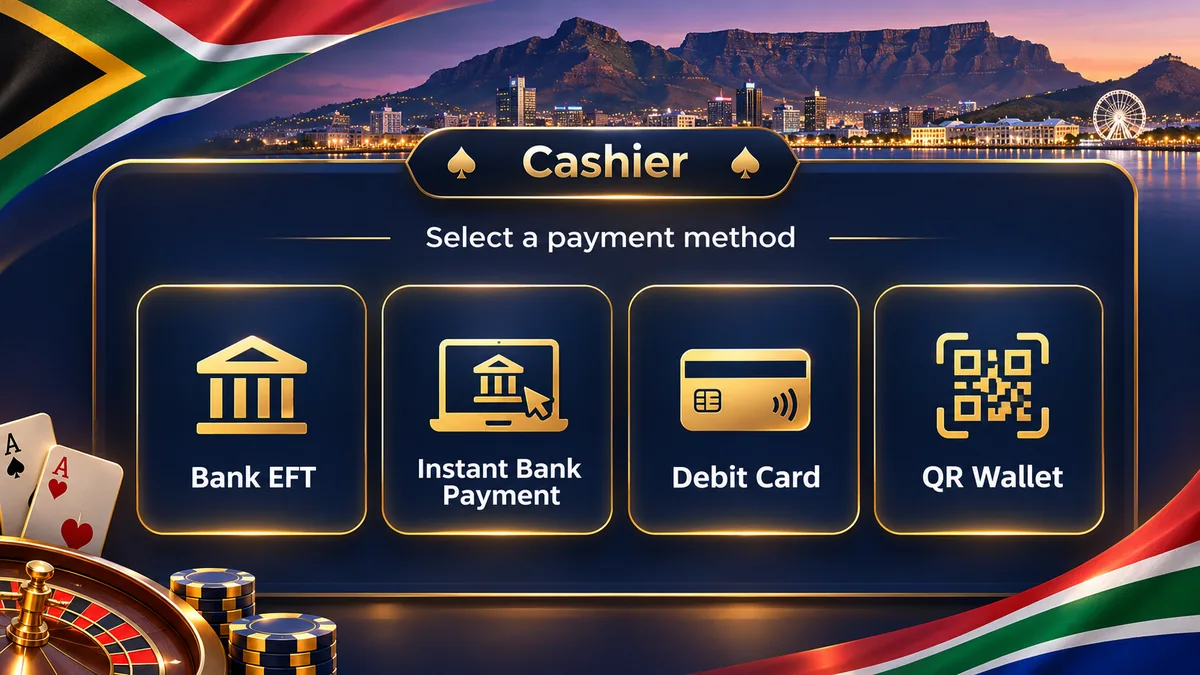
Cards: debit, credit, virtual and contactless
Visa and Mastercard are widely supported for South African in-store and online purchases. Acceptance of American Express, Diners Club, Maestro, Visa Electron and store cards such as RCS is more dependent on the merchant and its payment gateway. A debit card normally uses funds held in a linked account; a credit card draws against a credit facility and may incur interest when balances are not settled under its terms.
At a point of sale (POS), a chip-and-PIN transaction or a contactless tap uses the merchant's card terminal. For online card-not-present payments, the checkout may request a card number, expiry date and CVV/CVC. The card issuer can then request additional authentication through 3-D Secure, a banking-app approval, biometrics or a one-time PIN (OTP). A virtual card issued through a banking app may provide a separate set of card details for online purchases.
Authorisation tells the merchant whether the issuer accepted the transaction. It does not mean the merchant has already received the money in its bank account. Card networks and acquiring banks process clearing and settlement after authorisation. Refunds travel through a separate process and can take several business days to appear.
Card disputes: a chargeback is a bank- or card-network dispute process, not a buyer's unconditional right to reverse any purchase. Evidence, reason codes and deadlines matter. A shopper who receives damaged goods should keep the order confirmation, delivery information and correspondence with the seller.
Bank transfers: standard EFT, immediate payments and PayShap
Standard electronic funds transfer (EFT)
An EFT moves money from one bank account to another through online banking or a banking app. Customers at Capitec, FNB, Absa, Standard Bank, Nedbank, Discovery Bank, Investec and other participating banks can initiate transfers subject to their account rules. A transfer within one bank may reflect sooner than an ordinary transfer between banks.
Manual EFT suits invoices and planned payments when immediate receipt is unnecessary. The payer enters the beneficiary, amount and reference. A mistyped account number or payment reference creates a recovery or reconciliation problem; an emailed proof of payment does not verify that funds have cleared.
Immediate EFT versus PayShap
An immediate-payment option offered by a bank is not the same product as PayShap. Banks may charge separate fees and impose different limits for each. PayShap, introduced in 2023, is South Africa's faster-payment scheme for near-real-time account-to-account transfers through participating banks. It supports payments to bank account details and, where available, to an alias called a ShapID .
A ShapID links an identifier, often a registered cellphone number with a bank suffix, to a bank account. It reduces the need to exchange a full account number. PayShap Request-to-Pay capabilities let a payer approve a request within a supported bank channel. Not every bank offers the same PayShap features, transaction ceilings or pricing; Absa's published PayShap details and each bank's current tariff overview illustrate why a single nationwide fee or limit would be misleading.
Before sending: compare the recipient's displayed details with the person or business you intend to pay. A correctly authenticated instant transfer sent to a fraudster may be difficult to retrieve. Contact the bank immediately after a mistaken payment rather than assuming a cancellation button exists.
Instant EFT and pay-by-bank checkout
Instant EFT is often the name used at an online checkout for an account-to-account payment with automated payment information and prompt merchant confirmation. Ozow and other pay-by-bank providers offer this type of experience. Capitec Pay enables eligible Capitec customers to authorise supported merchant payments through the bank's app instead of entering card details; Absa Pay is another bank-linked checkout option. SiD Secure EFT appears through selected gateways.
These names describe different products and integrations, not interchangeable access to the same payment network. The flow may redirect to a bank, open a banking-app approval or use another provider-managed authentication screen. Some flows request online-banking credentials, while others rely on a bank-controlled authorisation. Check the exact domain and the bank's instructions; never interpret a familiar payment logo as proof that a page is genuine.
A message that the shop has received payment confirmation may arrive before the merchant's payout. Ozow's checkout instructions show the customer authorisation steps; the shop's payment processor separately determines when it releases settled funds.
Digital wallets and QR-code payments
Apple Pay , Google Pay and Samsung Pay (within Samsung Wallet on compatible devices) enable eligible payment cards to be used without typing their details at every checkout. Device authentication can include Face ID, Touch ID, fingerprint or a passcode. These wallets generally ride on the underlying card infrastructure. A wallet transaction can still be subject to the card issuer's rules, merchant refund policy and card dispute process.
At an NFC-enabled terminal, a compatible phone or watch may replace a physical card. Online wallet buttons work only when the merchant, checkout provider, device and linked card support them. A digital wallet is not the same as a cash balance held in a mobile-money account.
SnapScan , Zapper and Scan to Pay use QR-based payment experiences. A customer scans a merchant code, checks the name and amount, then authorises payment. Some QR codes contain a pre-filled merchant and amount; others require the payer to enter a value. The payment's underlying funding source and refund path vary by app and merchant setup. A QR code sticker placed over a legitimate till code can redirect money to a different recipient, so the merchant identity on screen matters more than the printed logo.
Stitch's 2026 South African consumer payments report describes rapid adoption of wallets and bank-native payments among its digitally active sample. That sample does not represent every cash-using household; acceptance still needs to match the people and locations involved in the transaction.
Cash, prepaid vouchers and mobile-money services
Cash requires no smartphone, account or connectivity at the moment of purchase. It gives the buyer an immediate exchange but little built-in transaction history. Carrying cash creates theft and loss risk, and making change or reconciling takings imposes costs on merchants.
For online orders, SCode can generate a barcode that a shopper takes to a participating retailer, including selected Shoprite and Checkers outlets, to settle an order using an accepted in-store payment method. 1Voucher (associated with 1ForYou ) is a prepaid PIN that can be bought at supported retail points such as PEP, spaza shops or participating supermarket outlets and redeemed only with participating merchants. OTT vouchers are another cash-to-digital option where a seller supports the network. A voucher is not the same as a bank transfer: redemption rules, validity and refund rights follow its issuer and retailer terms.
MukuruPay , MTN MoMo and bank-run services such as FNB eWallet or CashSend offer other ways to move or spend money, sometimes with cash pickup or cash-in facilities. Coverage, identification requirements, charges and withdrawal locations differ. A recipient without a traditional bank card should confirm how they will actually receive or cash out the money before the sender pays.
Prepaid codes must be treated like cash. Anyone who receives the valid PIN may be able to redeem its value. Do not read voucher codes to an unexpected caller or send screenshots to someone claiming a transaction must be "verified".
Buy Now, Pay Later, store accounts and credit

BNPL is a way to defer part of a purchase price, not a discount. Payflex offers eligible shoppers different instalment structures, including Pay in 2, Pay in 3 and Pay in 4. Under its Pay in 4 option, the first quarter is paid at checkout and three further instalments follow over six weeks. PayJustNow offers a Pay in 3 product with instalments organised around the shopper's payment schedule; its separate PayStretch product has different terms. MoreTyme is another instalment option shown at selected checkouts.
Interest-free marketing applies only to the specific product and conditions advertised. Missed repayments can attract charges or restrict future use. An approved order still leaves the customer liable for scheduled deductions even when household expenses rise before payday. Check the Payflex payment schedule or PayJustNow instalment terms against the purchase amount and expected income dates.
Mobicred is different: it is a revolving credit facility with a credit agreement, minimum monthly repayments and applicable costs. RCS store cards or other retail credit accounts may offer yet another set of repayment terms. A BNPL plan, a revolving credit line and a debit card should not be grouped together merely because all three appear as checkout buttons.
For any deferred payment, compare the full amount repayable, the dates money leaves the account, late fees, consequences of missed payments, and how refunds adjust remaining instalments. A R2,400 basket split into four R600 instalments still commits R2,400 of future cash flow before any charge for missed payments.
Debit orders, DebiCheck and recurring payments

A debit order is a collection initiated by a service provider under an agreed mandate, often for insurance premiums, mobile contracts, subscriptions or loan instalments. It differs from an EFT, which the customer sends. South Africa's debit-order streams include EFT debits, Registered Mandate (RM) collections and DebiCheck .
With DebiCheck, the consumer authenticates the mandate with their bank at the start of the arrangement. The bank can then validate subsequent collections against agreed conditions. The Payments Association of South Africa (PASA) explains the differences between electronically approved DebiCheck mandates and other debit-order arrangements.
An unauthorised collection should be queried promptly with the bank and the collecting business. Reversing a deduction does not automatically cancel the underlying contract or erase a legitimate debt. To stop future legitimate collections, follow the service provider's cancellation process, retain the written confirmation and check later bank statements.
Receiving payments from overseas

International card payments, PayPal , bank transfers and remittance services such as MoneyGram or Mukuru serve different purposes. A South African merchant accepting foreign cards needs a gateway that supports the relevant card scheme and cross-border processing. A family member receiving a remittance may care more about cash-out location, recipient ID checks and the final rand amount.
PayPal's South African withdrawal arrangements involve a local banking partner. PayPal describes the FNB-linked withdrawal process for eligible South African bank accounts. Eligibility, partner procedures and transfer times can change. The displayed foreign-exchange rate, conversion spread, provider fee and receiving-bank charges should be checked before comparing two services.
Cryptocurrency may be accepted by some specialised providers, sometimes converted into rand before reaching a merchant. It is not a universal retail payment method, prices fluctuate and blockchain transfers do not provide card-style chargebacks. No seller should assume that every payment provider or industry accepts crypto.
Why a successful payment is not always settled money
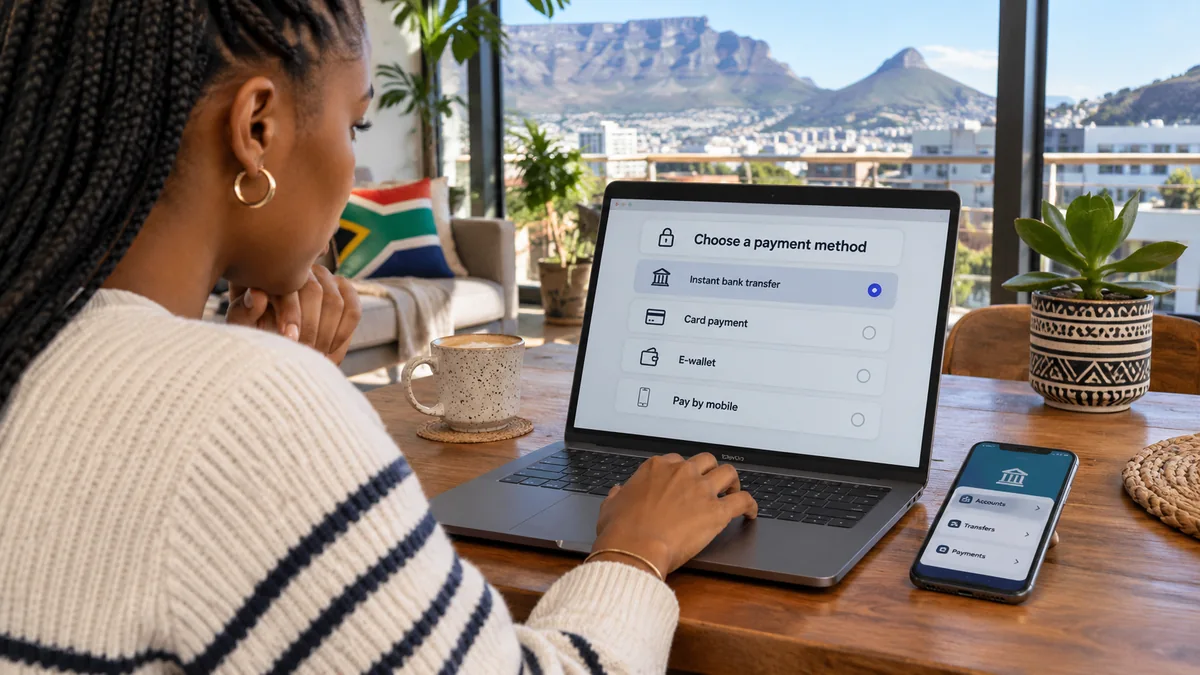
Several stages can sit behind the word paid :
- Initiated: the customer begins a transaction, but the bank or payment provider has not approved it.
- Authorised or confirmed: a bank, card issuer or provider confirms the customer's payment instruction or reserves the amount.
- Captured, cleared or settled: the payment moves through the relevant processing and settlement arrangement; the precise sequence differs by method.
- Paid out: a merchant's payment service provider transfers the available proceeds, after applicable fees or holds, to the merchant's bank account.
These stages are not interchangeable. A card authorisation can later fail to be captured. An Instant EFT provider may notify the merchant promptly while paying that merchant on a scheduled cycle. A bank transfer screenshot can be forged without any payment occurring. For a seller, the reliable evidence is the transaction status inside their own bank or authenticated merchant dashboard, matched to the order reference and amount.
The same distinction matters for refunds. A merchant may mark a refund as processed while the shopper's card issuer has not yet posted the credit. A declined order followed by a pending card hold does not automatically prove that the money was finally charged.
What does a payment really cost-
A checkout that shows no customer fee can still involve merchant processing fees. A method advertised as instant can cost more than an ordinary EFT; a free transfer may incur a cash-out fee for the recipient. Rather than relying on a single headline rate, examine the cost at both ends.
| Cost or restriction | Where it appears | What to verify |
|---|---|---|
| Bank transfer fee | Immediate bank payments and some PayShap transactions | Current bank tariff, per-transfer cost and channel limits |
| Merchant discount or gateway fee | Cards, wallets, QR and pay-by-bank checkout | Percentage, fixed fee, VAT, payout and refund charges |
| Currency conversion | International cards, PayPal and remittances | Final ZAR received or paid, not just advertised transfer fees |
| Late or credit-related charges | BNPL, Mobicred and retail credit | Full repayment schedule and missed-payment provisions |
| Cash-in, cash-out or voucher fee | Cash transfers, mobile money and prepaid codes | Fee charged to sender, recipient or both; expiry and refund conditions |
| Dispute and reversal costs | Card transactions, bank transfers and merchant acquiring | Dispute eligibility, timelines and any handling fees |
Merchant-facing services such as Payfast/Paygate , Yoco , Peach Payments , Stitch and Ozow have different products, settlement rules and enabled methods. Even a single provider may support a payment option through one integration model but not another. A merchant's approval to accept a method should be confirmed in their actual account and gateway documentation, not inferred from a provider's full public product list.
Payment security: what protects the transaction-
Authentication, encryption and data handling
Card security can involve EMV chips, payment tokenisation, 3-D Secure and monitoring by the issuer or payment provider. Two-factor authentication (2FA) , OTPs and biometric approval help establish that the person authorising a payment controls the relevant device or account. They do not establish that the recipient is honest. A scammer can trick a real account holder into approving a payment to the scammer.
PCI DSS sets security requirements for organisations handling payment card data; it does not certify a merchant's business practices or guarantee delivery of goods. South Africa's Protection of Personal Information Act (POPIA) sets requirements for safeguarding personal information. A privacy notice explains intended data handling but is not proof that a merchant is legitimate. Look for the precise amount, merchant name and bank approval details before authorising.
Common scams and practical checks
- Fake proof of payment: do not release goods based solely on an SMS, screenshot or PDF from the buyer. Verify the transaction through your bank or merchant processor.
- Phishing and smishing: avoid payment links that unexpectedly request internet-banking passwords, card PINs or OTPs. Open the known bank app separately instead of using a link from a stranger.
- Social engineering: treat an urgent "refund", "account verification" or "reverse payment" instruction as suspicious when it requires approving a new transfer.
- QR-code substitution: compare the merchant name in the app with the actual business before entering the PIN or approving the amount.
- Changed beneficiary details: separately confirm bank details when an invoice suddenly supplies a different account, particularly for large once-off payments.
- Card and device controls: use spending notifications, app locks, device biometrics and appropriate transaction limits; freeze a missing card or compromised device through the issuer promptly.
FNB's fraud guidance documents fake bank pages and payment notifications. A secure-looking page, HTTPS padlock or recognisable brand icon does not by itself prove the recipient's identity.
Failed payments, wrong recipients and refunds
A failed checkout can result from insufficient funds, a daily limit, incorrect card details, an expired card, an interrupted 3-D Secure challenge, temporary provider downtime or bank fraud controls. Check the transaction history and whether funds are merely pending before retrying. Repeating a payment without checking can create a duplicate debit.
For card purchases , contact the merchant for a normal refund and the issuing bank for a suspected unauthorised transaction or eligible dispute. For a bank transfer or PayShap payment , notify the sending bank immediately about an error or fraud; recovery is not guaranteed after the recipient has been credited. For vouchers , the issuer's redemption and refund rules govern; already redeemed codes are especially difficult to recover. For BNPL , obtain confirmation of how a merchant refund changes the provider's remaining instalments instead of simply cancelling the linked card.
If a debit order is unfamiliar, consult the bank's formal dispute channel and identify the collector. A pending refund, reversal request and successful reversal are three different statuses. Keep dates, transaction references and communications until the final credit or correction appears.
Payment methods for South African businesses
A small online store may need card payments, wallets and a bank-based option; an informal trader may find a card reader plus QR acceptance more useful; a subscription service needs reliable mandate management. A merchant serving cash-preferring customers may have a reason to support vouchers or retail barcode payments. Adding every possible logo can make checkout more confusing without increasing completed payments.
When assessing a payment service provider (PSP) or gateway, use a consistent shortlist: accepted banks and schemes, supported ZAR transactions, per-transaction fees, settlement and payout timing , chargeback handling, partial refunds, failed-payment recovery, fraud controls, reporting and integration with a point-of-sale system or an online platform such as Shopify, WooCommerce or Wix. For a seller with frequent orders, transaction IDs and reconciliation exports matter as much as the number of payment buttons.
Bank rules, merchant category restrictions and provider eligibility can change which methods are available. Payfast's payment-method catalogue covers cards, Capitec Pay, wallets, vouchers, BNPL and QR services, with availability varying by product. Peach Payments, Yoco and other providers publish their own supported-method and integration details. Processing a payment through one of these providers does not mean the provider itself is the shopper's bank.
Frequently asked questions
For a recognised store and an eligible bank card, debit or credit card and a supported digital wallet offer familiar checkout and issuer dispute routes. Pay by bank is useful when the shopper prefers direct account authorisation. The stronger choice is the one the merchant legitimately accepts, with fees and refund conditions the buyer understands.
No. PayShap is a national faster-payment scheme accessed through participating banks. "Instant EFT" commonly describes an automated bank-payment checkout service or a faster transfer option. The initiating interface, fee, bank coverage, limits and confirmation arrangements are not identical.
Do not assume it can. Report the transaction to the sending bank immediately and provide the recipient details, amount and reference. The bank can explain its recovery process, but the successful authorisation of an instant payment does not create a guaranteed refund.
At participating merchants, SCode retail payment barcodes or prepaid products such as 1Voucher can turn cash into an online-order payment. Some mobile-money services provide other routes. Eligibility, retailer coverage, voucher conditions and cash-out access need checking before purchase.
Tokenised wallet payments can reduce repeated exposure of the underlying card number to merchants and use device-based authentication. They do not eliminate account takeover, dishonest sellers or the risk of approving an incorrect amount. The card issuer and merchant still determine important dispute and refund conditions.
Approval, clearing, settlement and merchant payout are separate stages for many payment services. The seller should check the authenticated gateway dashboard and payout schedule; the buyer should verify whether the bank transaction is pending, completed or reversed before attempting another payment.
Card payments can offer bank- or network-based dispute procedures for qualifying purchases. That does not guarantee success. EFT and instant bank transfers rely on different recovery processes; voucher redemption and BNPL refunds follow their own terms. Read the seller's return policy and the provider's dispute rules before paying an unfamiliar business.